
Kurupukari
Basic information
Sample name: Kurupukari
Sample aka: Iwokrama Rain Forest Programme
Reference: P. G. Smith and S. M. Kerry. 1996. The Iwokrama Rain Forest Programme for sustainable development: how much of Guyana's bat (Chiroptera) diversity does it encompass?. Biodiversity and Conservation 5(7):921-942 [ER 1221]
Geography
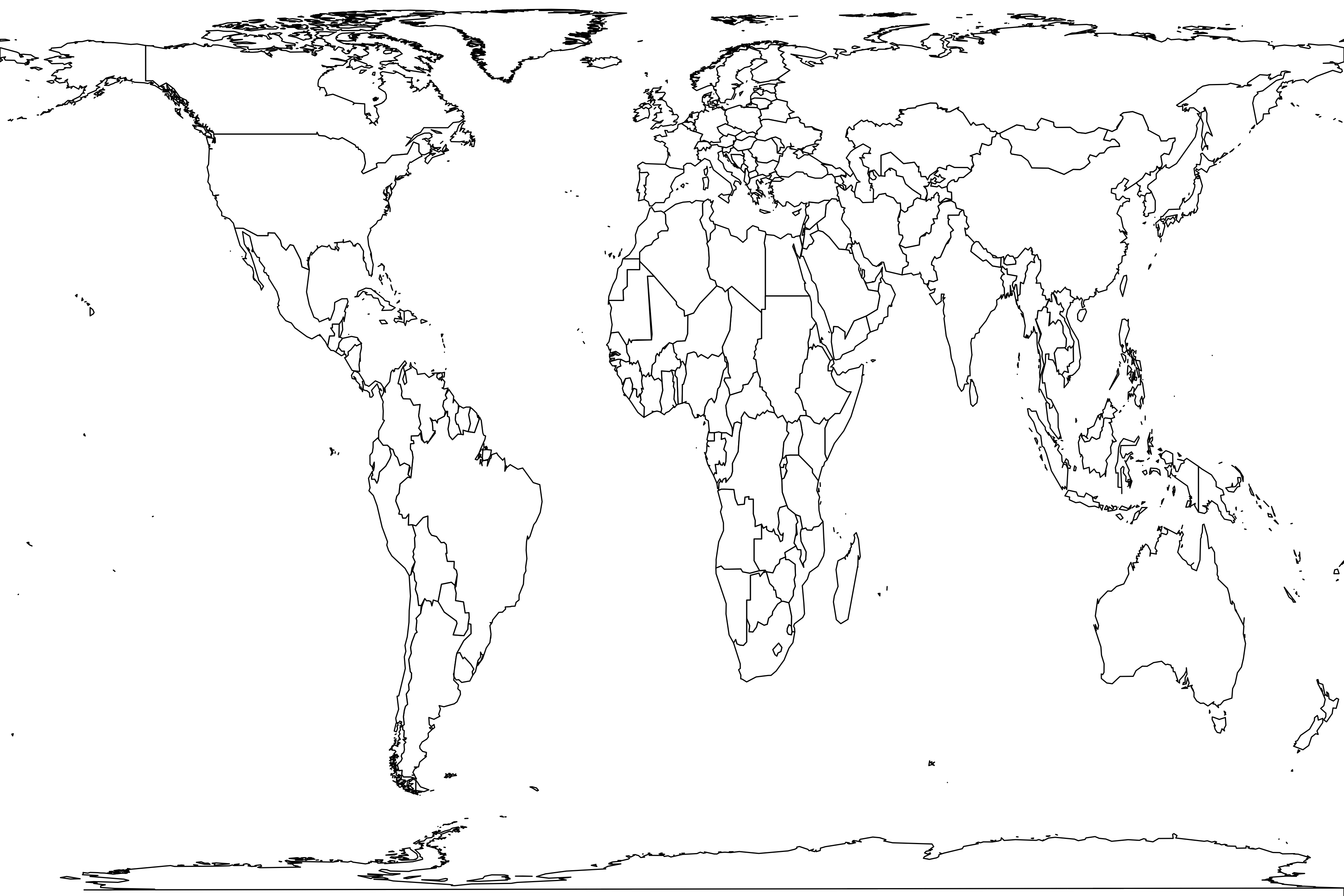
Country: Guyana
Coordinate: 4° 40' N, -58° 40' W
Latlng basis: based on nearby landmark
Geography comments: "on a part of the Kurupukari Sand Plateau that includes the Amerindian village of Kurupukari"
coordinate based on Kurupukari crossing
coordinate based on Kurupukari crossing
Environment
Habitat: tropical/subtropical moist broadleaf forest
Substrate: ground surface
MAT: 26.1
MAP: 3052.0
Habitat comments: "tropical rain forest"
climate data are for Kurupukari and are from Malhi et al. (2006, Global Change Biology)
climate data are for Kurupukari and are from Malhi et al. (2006, Global Change Biology)
Methods
Life forms: bats
Sites: 7
Sampling methods: no design, harp nets, mist nets
Sample size: 137 individuals
Net or trap nights: 0
Basal area status: not applicable
Sampling comments: "Bats were sampled by use of up to seven mist nets, each having four panels and with areas ranging from 6.0 m × 2.7 m to 12.0 m × 3.6 m. Two harp traps, each with an effective trap area of 2.5 m2 were also used... Sampling at the seven netting sites amounted to 22 400 m 2 mist net hours during 26 nights plus 227 m2 harp trap hours during eight nights"
Metadata
Sample no: 1760
Contributor no: John Alroy
Enterer: John Alroy
Created: 2015-09-16 20:00:12
Modified: 2018-04-13 11:01:04
Abundance distribution
Each square represents a species. Square sizes are proportional to counts. Values are logged.
Statistics
33 species
12 singletons
total count 137
geometric series index: 70.9
Fisher's α: 13.8
geometric series k: 0.9021
Hurlbert's PIE: 0.927
Shannon's H: 3.0303
Good's u: 0.913
Register
| Rhynchonycteris naso | 1 | 3.7 g |
| Saccopteryx bilineata (greater sac-winged bat) | 2 | 7.9 g |
| Saccopteryx canescens (frosted sac-winged bat) | 2 | 4.7 g |
| Saccopteryx leptura (lesser sac-winged bat) | 3 | 4.8 g |
| Cormura brevirostris | 1 | 9.9 g |
| Pteronotus parnellii (Parnell's mustached bat) | 8 | 21.2 g |
| Pteronotus personatus (Wagner's mustached bat) | 1 | |
| Micronycteris minuta (whie-bellied big-eared bat) | 1 | 7.4 g |
| Tonatia bidens | 1 | 29.7 g |
| Lophostoma silvicolum (white-throated round-eared bat) | 6 | 39.4 g |
| "Tonatia silvicola" | ||
| Phyllostomus discolor (pale spear-nosed bat) | 2 | 40.3 g |
| Phyllostomus elongatus (lesser spear-nosed bat) | 1 | 35.8 g |
| Trachops cirrhosus (fringe-lipped bat) | 1 | 31.4 g |
| Chrotopterus auritus (big-eared woolly bat) | 1 | 76.6 g |
| Lonchophylla thomasi | 7 | 7.4 g |
| Glossophaga soricina (Pallas's long-tongued bat) | 3 | 10.5 g |
| Anoura geoffroyi (Geoffroy's tailless bat) | 5 | 12.8 g |
| Choeroniscus minor | 11 | 9.6 g |
| Carollia brevicauda (silky short-tailed bat) | 27 | 17.4 g |
| Rhinophylla pumilio | 9 | |
| Sturnira tildae (Tilda's yellow-shouldered bat) | 8 | 24.4 g |
| Platyrrhinus helleri (Heller's broad-nosed bat) | 2 | 19.4 g |
| Vampyriscus bidens | 2 | |
| "Vampyressa bidens" | ||
| Vampyriscus brocki | 1 | |
| "Vampyressa brocki" | ||
| Phyllostomidae indet. | 2 | |
| "Vampyressa sp." | ||
| Chiroderma trinitatum (little big-eyed bat) | 6 | 14.6 g |
| Chiroderma villosum (hairy big-eyed bat) | 5 | 23.4 g |
| Artibeus glaucus (silver fruit-eating bat) | 6 | |
| Artibeus lituratus (great fruit-eating bat) | 5 | 68.5 g |
| Artibeus obscurus (dark fruit-eating bat) | 1 | |
| Artibeus planirostris (flat-faced fruit-eating bat) | 1 | 54.4 g |
| Diaemus youngi | 1 | |
| Myotis sp. | 4 | |