
Gidley Quarry
Basic information
Sample name: Gidley Quarry
Reference: G. G. Simpson. 1937. The Fort Union of the Crazy Mountain Field, Montana, and its mammalian faunas. Bulletin of the United States National Museum 169:1-287 [ER 4101]
Geography
Country: United States
State: Montana
County: Sweetgrass
Coordinate: 46.16° N, -109.78° W
Latlng basis: stated in text
Scale: quarry
Formation: Fort Union
Time interval: Early Palaeocene
Zone: Torrejonian
Section: CMB
Unit number: 1
Unit order: below to above
Max Ma: 63.537
Min Ma: 62.53
Age basis: paleomag
Geography comments: "NW1/4NE1/4 sec. 25, T. 5 N., R. 15 E." and "immediately adjacent to the county road" above "the valley of the upper part of Widdecombe Creek"
"In many places the fossils are concentrated in a single or fairly well defined layer an inch thick or even less" forming "a bone-bed" but "In other places" the layer is "up to about 18 inches at most"
"The level is about 125 or 150 feet below the base of the No. 3 sandstone" and 1, 200 feet above the base of the Fort Union No. 1
in the same polarity chron as the Silbering Quarry according to Buckley (1993, JVP 13:28A), i.e., chron 27R
age assignment based on Ogg (2020)
the No. 2 beds are correlated with the Torrejon in New Mexico (i.e., are Torrejonian)
"In many places the fossils are concentrated in a single or fairly well defined layer an inch thick or even less" forming "a bone-bed" but "In other places" the layer is "up to about 18 inches at most"
"The level is about 125 or 150 feet below the base of the No. 3 sandstone" and 1, 200 feet above the base of the Fort Union No. 1
in the same polarity chron as the Silbering Quarry according to Buckley (1993, JVP 13:28A), i.e., chron 27R
age assignment based on Ogg (2020)
the No. 2 beds are correlated with the Torrejon in New Mexico (i.e., are Torrejonian)
Environment
Lithology: shale
Taphonomic context: lake deposit, carnivore accumulation
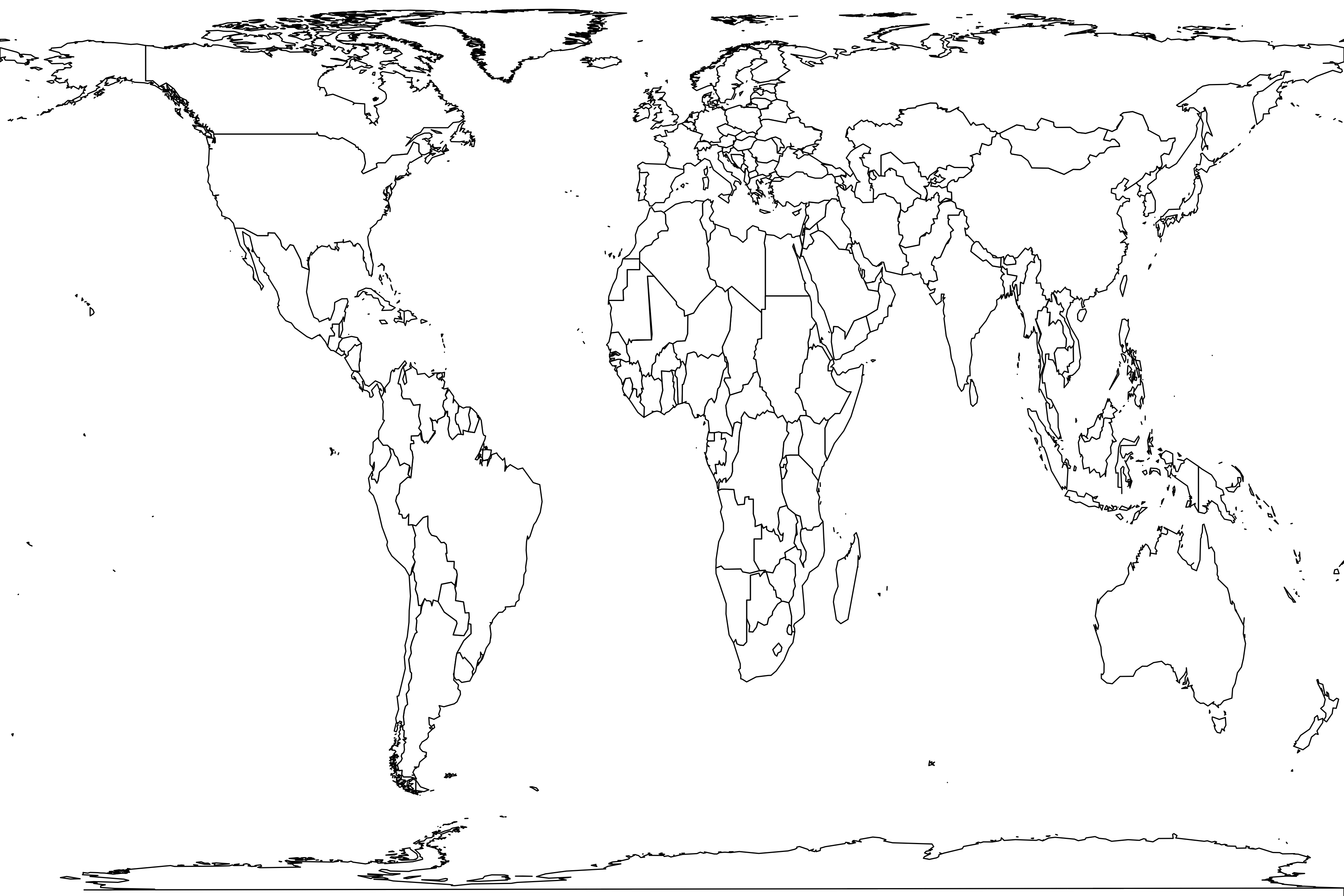
Habitat comments: mammal localities in this area in general are "almost entirely on the rarer shale exposures... seldom as much as a hundred yards in diameter and generally much less... Nothing approaching a complete skeleton has ever been found" in the field area and there are hardly any associations
"the deposit was formed in sluggish water, perhaps a swampy stream course, ox-bow lake, or bayou" with "breaking and scattering" and "many clean breaks, lack of association, and also the common intervention of maceration" suggesting accumulation by "carnivorous fishes and reptiles"
"the deposit was formed in sluggish water, perhaps a swampy stream course, ox-bow lake, or bayou" with "breaking and scattering" and "many clean breaks, lack of association, and also the common intervention of maceration" suggesting accumulation by "carnivorous fishes and reptiles"
Methods
Life forms: carnivores, primates, ungulates, other large mammals, other small mammals
Excluded forms: lizards, fishes, clams
Sampling methods: quarry
Sample size: 1023 specimens
Years: 1905, 1909, 1935
Museum: UNSM
Net or trap nights: 0
Basal area status: not applicable
Sampling comments: the metadata for this sample are based on Simpson (1937) and the faunal list is drawn from Rose (1981)
first discovered by Albert C. Silberling "as a surface prospect" in 1905, collected intensively by Silberling and J. W. Gidley in 1909, and quarried "intermittently ever since... for the National Museum" in "an area of about 1, 400 square feet" with "the Third Scarritt Expedition in 1935" extending "over an area of about 1, 750 square feet"
there are "Gar scales (Lepisosteus sp.)" and numerous "fishes, apparently mostly Stylomyleodon, represented by associated strings of vertebrae", plus "Lizard remains are fairly common" and there are rare "aquatic molluscs"
counts are of upper and lower jaws only: all species are known from at least one
first discovered by Albert C. Silberling "as a surface prospect" in 1905, collected intensively by Silberling and J. W. Gidley in 1909, and quarried "intermittently ever since... for the National Museum" in "an area of about 1, 400 square feet" with "the Third Scarritt Expedition in 1935" extending "over an area of about 1, 750 square feet"
there are "Gar scales (Lepisosteus sp.)" and numerous "fishes, apparently mostly Stylomyleodon, represented by associated strings of vertebrae", plus "Lizard remains are fairly common" and there are rare "aquatic molluscs"
counts are of upper and lower jaws only: all species are known from at least one
Metadata
Sample no: 4523
Contributor no: John Alroy
Enterer: John Alroy
Modifier no: John Alroy
Created: 2024-11-29 21:25:04
Modified: 2024-12-03 08:29:00
Abundance distribution
Each square represents a species. Square sizes are proportional to counts. Values are logged.
Statistics
57 species
11 singletons
total count 1023
geometric series index: 83.6
Fisher's α: 13.025
geometric series k: 0.9135
Hurlbert's PIE: 0.9308
Shannon's H: 3.1833
Good's u: 0.9893
Register
| †Stygimys jepseni | 4 | |
| Parectypodus jepseni of Simpson 1937 | ||
| †Anconodon gidleyi | 4 | |
| Ptilodus gidleyi of Simpson 1937 | ||
| †Anconodon russelii | 15 | |
| Ectypodus russelli of Simpson 1937 | ||
| †Ptilodus montanus | 159 | |
| Ptilodus douglassi = †Baiotomeus douglassi | 8 | |
| †Neoplagiaulax grangeri | 5 | |
| Ectypodus grangeri of Simpson 1937 | ||
| †Mimetodon silberlingi | 14 | |
| Ectypodus silberlingi of Simpson 1937 | ||
| †Parectypodus sinclairi | 14 | |
| Ptilodus sinclairi of Simpson 1937 | ||
| Mesodma sp. | 1 | |
| siad to be new | ||
| Neoplagiaulacidae indet. 1 | 5 | |
| Neoplagiaulacidae indet. 2 | 6 | |
| also 4 specimens of indeterminate neoplagiaulacids | ||
| †Gelastops parcus | 10 | |
| includes the type of "Emperodon acmeodontoides" of Simpson 1935 | ||
| †Avunculus didelphodonti | 2 | |
| †Stilpnodon simplicidens | 6 | |
| Palaeoryctidae indet. | 1 | |
| ? | ||
| †Myrmecoboides montanensis | 3 | |
| †Prodiacodon concordiarcensis | 3 | |
| †Prodiacodon furor | 3 | |
| †Aphronorus fraudator | 55 | |
| Aphronorus sp. | 2 | |
| said to be new | ||
| †Coriphagus montanus | 18 | |
| Propalaeosinopa diluculi = †Bessoecetor septentrionalis | 17 | |
| Bessoecetor diluculi of Simpson 1937 | ||
| †Leptonysson basiliscus | 1 | |
| †Eudaemonema cuspidata | 32 | |
| †Jepsenella praepropera | 1 | |
| Proteutheria indet. | 3 | |
| possible pantolestid | ||
| †Leptacodon munusculum | 7 | |
| Mckennatherium ladae = †Adunator ladae | 25 | |
| Leptacodon ladae of Simpson 1937 | ||
| Adapisoricidae indet. | 1 | |
| ? | ||
| †Palaechthon alticuspis | 35 | |
| †Palenochtha minor | 17 | |
| †Pronothodectes matthewi | 16 | |
| †Elphidotarsius florencae | 1 | |
| †Paromomys maturus | 106 | |
| †Paromomys depressidens | 21 | |
| †Picrodus silberlingi | 17 | |
| Tricentes punitor = †Chriacus punitor | 49 | |
| Metachiracus punitor of Simpson 1937 | ||
| Spanoxyodon latrunculus = Spanoxyodon latrunculus | 1 | |
| †Prothryptacodon furens | 8 | |
| Mimotricentes latidens = †Mimotricentes subtrigonus | 5 | |
| Claenodon montanensis = †Arctocyon montanensis | 7 | |
| includes Claenodon silberlingi | ||
| Claenodon latidens = †Arctocyon latidens | 1 | |
| one specimen tenatively placed under Claenodon montanensis by Rose, but also considered possibly valid by him, and valid according to later authors | ||
| Claenodon sp. | 1 | |
| same specimen as the one discussed by Simpson 1937 | ||
| †Tetraclaenodon puercensis | 6 | |
| does not include any Tetraclaenodon septentrionalis material of Thewissen 1990 | ||
| †Haplaletes disceptatrix | 25 | |
| †Litomylus dissentaneus | 24 | |
| †Litaletes disjunctus | 32 | |
| Promioclaenus aquilonius = †Promioclaenus acolytus | 140 | |
| Ellipsodon aquilonius of Simpson 1937 | ||
| †Anisonchus sectorius | 20 | |
| Dissacus sp. | 2 | |
| †Pantolambda intermedium | 5 | |
| intermedius of Simpson 1937: probably also includes his Pantolambda sp., and includes the type of Titanoides simpsoni separately listed by Rose | ||
| Conoryctidae indet. | 1 | |
| "Conoryctes comma": see Schoch 1986 | ||
| †Ictidopappus mustelinus (viverravid) | 2 | |
| †Protictis haydenianus (viverravid) | 5 | |
| Protictis microlestes = †Bryanictis microlestes (viverravid) | 46 | |
| Didymictis microlestes of Simpson 1937 | ||
| Protictis tenuis = †Simpsonictis tenuis (viverravid) | 4 | |
| Didymictis tenuis of Simpson 1937 | ||
| Bryanictis vanvaleni = †Intyrictis vanvaleni (viverravid) | 1 | |
| Rigby 1980: minimum estimate, specimen or specimens included by Roe in Protictis tenuis | ||