
Los Tuxtlas Biological Research Station (forest fragment bats)
Basic information
Sample name: Los Tuxtlas Biological Research Station (forest fragment bats)
Reference: A. Estrada and R. Coates-Estrada. 2001. Species composition and reproductive phenology of bats in a tropical landscape at Los Tuxtlas, Mexico. Journal of Tropical Ecology 17:627-646 [ER 399]
Geography
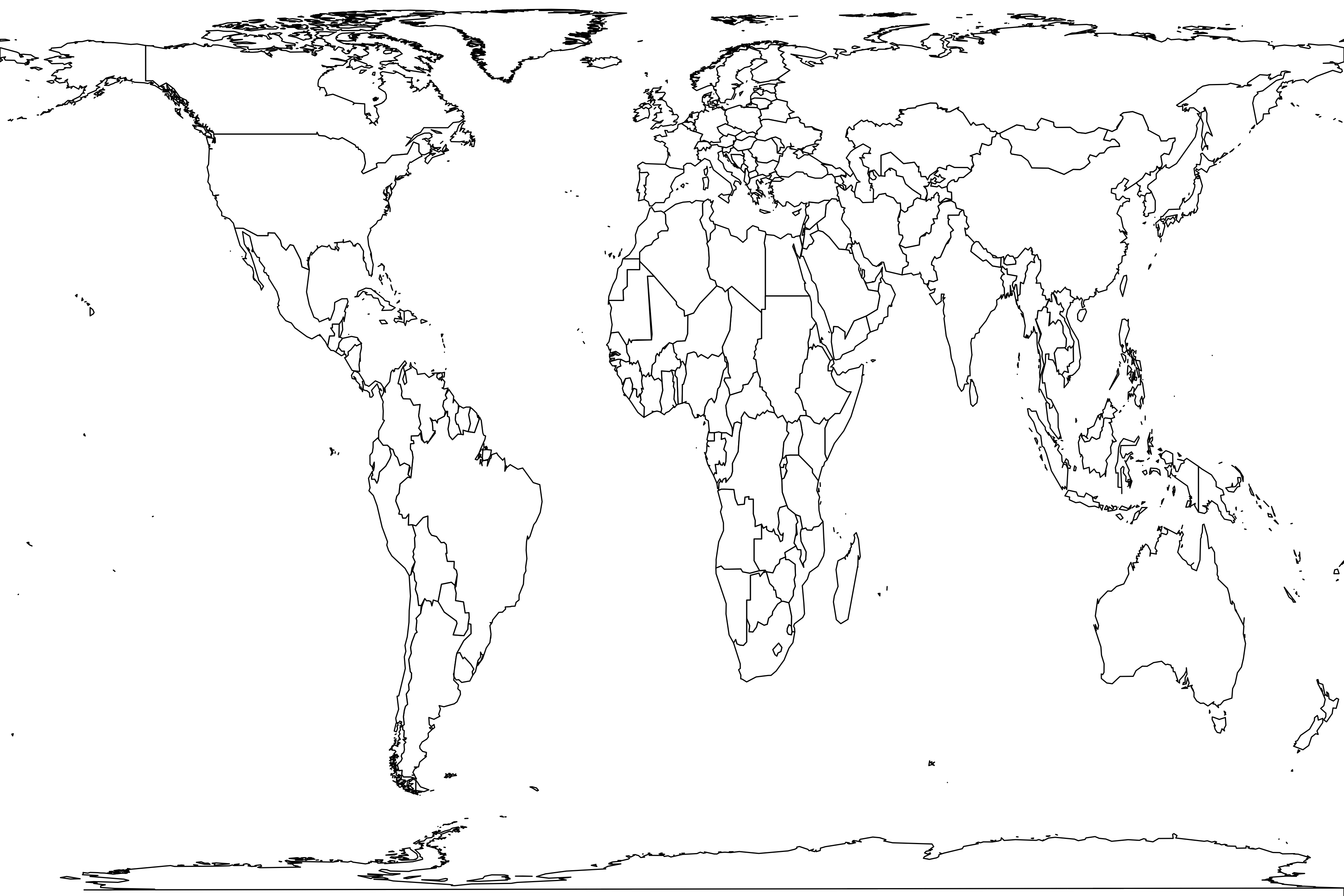
Country: Mexico
State: Veracruz
Coordinate: 18° 25' N, 95° 0' W
Latlng basis: stated in text
Geography comments: elevation from zero to 300 m
Environment
Habitat: tropical/subtropical moist broadleaf forest
Altered habitat: fragment
Protection: biosphere reserve
Substrate: ground surface
MAT: 27.0
MAP: 4900.0
Habitat comments: "A 90-km 2 landscape, originally occupied by rain forest, consisted of forest fragments and natural corridors of vegetation surrounded by pasturelands"
forest fragments ranged "in area from 1 to 200 ha (median = 18 ha, average = 35±39 ha)"
forest fragments ranged "in area from 1 to 200 ha (median = 18 ha, average = 35±39 ha)"
Methods
Life forms: bats
Sites: 52
Sampling methods: no design, mist nets
Sample size: 2098 individuals
Years: 1996 - 1998
Net or trap nights: 208
Basal area status: not applicable
Sampling comments: site count is of forest fragments
208 sample nights and 1040 net hours
208 sample nights and 1040 net hours
Metadata
Sample no: 742
Contributor no: John Alroy
Enterer: John Alroy
Created: 2014-04-04 17:36:46
Modified: 2020-06-05 06:47:32
Abundance distribution
Each square represents a species. Square sizes are proportional to counts. Values are logged.
Statistics
37 species
2 singletons
total count 2098
geometric series index: 45.8
Fisher's α: 6.381
geometric series k: 0.8424
Hurlbert's PIE: 0.8823
Shannon's H: 2.5729
Good's u: 0.999
Register
| Pteronotus parnellii (Parnell's mustached bat) | 363 | 21.2 g |
| Carollia brevicauda (silky short-tailed bat) | 480 | 17.4 g |
| Sturnira lilium (little yellow-shouldered bat) | 251 | 18.7 g |
| Artibeus jamaicensis (Jamaican fruit-eating bat) | 185 | 48.0 g |
| Artibeus phaeotis (pygmy fruit-eating bat) | 155 | |
| "Dermanura phaeotis" | ||
| Vampyrodes caraccioli | 23 | 36.0 g |
| Artibeus toltecus (Toltec fruit-eating bat) | 96 | 14.6 g |
| "Dermanura tolteca" | ||
| Glossophaga soricina (Pallas's long-tongued bat) | 97 | 10.5 g |
| Choeroniscus godmani | 61 | 9.9 g |
| Platyrrhinus helleri (Heller's broad-nosed bat) | 47 | 19.4 g |
| Artibeus lituratus (great fruit-eating bat) | 57 | 68.5 g |
| Desmodus rotundus (common vampire bat) | 41 | 33.5 g |
| Carollia perspicillata (Seba's short-tailed bat) | 36 | 19.6 g |
| Mormoops megalophylla | 24 | 15.1 g |
| Phyllostomus discolor (pale spear-nosed bat) | 19 | 40.3 g |
| Uroderma bilobatum (tent-making bat) | 23 | 18.1 g |
| Sturnira ludovici (highland yellow-shouldered bat) | 21 | 25.0 g |
| Vampyressa pusilla | 14 | 9.0 g |
| Pteronotus davyi (Davy's naked-backed bat) | 8 | 8.1 g |
| Artibeus watsoni (Thomas's fruit-eating bat) | 14 | |
| "Dermanura watsoni" | ||
| Chiroderma villosum (hairy big-eyed bat) | 11 | 23.4 g |
| Saccopteryx bilineata (greater sac-winged bat) | 7 | 7.9 g |
| Lampronycteris brachyotis | 5 | 8.4 g |
| "Micronycteris brachyotis" | ||
| Mimon bennettii | 14 | 31.1 g |
| Bauerus dubiaquercus | 11 | 20.0 g |
| "Antrozous dubiaquercus" | ||
| Vampyrum spectrum | 2 | 169.0 g |
| Centurio senex | 6 | 19.0 g |
| Natalus stramineus | 5 | 5.3 g |
| Trachops cirrhosus (fringe-lipped bat) | 7 | 31.4 g |
| Micronycteris megalotis (little big-eared bad) | 1 | 6.4 g |
| Thyroptera tricolor | 3 | 4.3 g |
| Diclidurus albus | 2 | 18.3 g |
| Hylonycteris underwoodi | 2 | 7.8 g |
| Leptonycteris nivalis | 1 | 23.0 g |
| Glyphonycteris sylvestris | 2 | 11.0 g |
| "Micronycteris sylvestris" | ||
| Noctilio leporinus | 2 | 63.3 g |
| Lophostoma brasiliense (pygmy round-eared bat) | 2 | 10.7 g |
| "Tonatia brasiliense" | ||